Choking can happen anytime, anywhere—and often without warning. Whether you’re at home, at work, or out in public, knowing how to recognize a choking emergency and when to perform CPR can mean the difference between life and death.
At One Love CPR, we are committed to helping individuals become confident, certified, and prepared to save lives in every scenario. In this guide, we’ll explore what to do when someone is choking, when CPR becomes necessary, and how our training courses empower you with essential, hands-on skills.
Understanding Choking: A Life-Threatening Emergency
Choking occurs when a foreign object blocks the airway, preventing oxygen from reaching the lungs. If not treated immediately, choking can lead to loss of consciousness, brain damage, or death within minutes. That’s why acting quickly is critical.
Signs of Choking:
- Inability to speak, breathe, or cough
- Hands clutching the throat
- High-pitched wheezing sounds
- Lips or face turning blue
- Loss of consciousness (if not resolved quickly)
When to Use First Aid vs. CPR
One of the most common questions is: Should you do CPR when someone is choking? The answer depends on the person’s level of responsiveness.
If the Person is Conscious and Choking:
Do NOT perform CPR. Instead, provide choking first aid:
- Encourage them to cough if they can.
- If they can’t cough or speak, begin the Heimlich maneuver (abdominal thrusts) for adults and children.
- For infants under one year, alternate 5 back blows and 5 chest thrusts until the object is expelled.
- Continue until the object is dislodged or the person becomes unresponsive.
If the Person Becomes Unresponsive:
Now is the time to begin CPR.
- Gently lower the person to the ground.
- Call 911 or have someone else do it.
- Start chest compressions immediately.
- After 30 compressions, open the mouth and look for any visible object. If seen, remove it—do not perform blind finger sweeps.
- Provide 2 rescue breaths and continue cycles of 30 compressions to 2 breaths.
- Repeat until emergency personnel arrive or the person starts breathing again.
Special Considerations for Infants
When an infant is choking, the response is different than for adults:
- Lay the infant face-down across your forearm.
- Deliver 5 back blows between the shoulder blades.
- Turn the infant over and give 5 chest thrusts using two fingers.
- Continue alternating until the object comes out or the baby becomes unresponsive.
If the infant goes unresponsive:
- Place them on a flat, firm surface.
- Begin infant CPR (30 gentle compressions followed by 2 breaths).
- Look in the mouth before giving breaths.
Why Hands-On CPR Training Matters
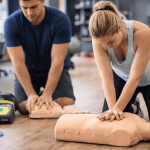
Knowing the theory is not enough. You must be physically prepared to act. At One Love CPR, our courses give you real-world practice and training using adult, child, and infant manikins so you can respond with clarity and confidence.
Our CPR & First Aid Certification Courses Offer:
- American Heart Association (AHA) guidelines.
- CPR & choking relief for infants, children, and adults.
- Hands-on practice and real-life simulations.
- Certification valid for 2 years.
- Convenient classes in New Jersey, New York, and Connecticut.
Take Action: Get Certified Today!
Don’t wait for an emergency to realize you’re not ready. Be the person who knows exactly what to do. Whether you’re a parent, teacher, healthcare professional, or concerned citizen, CPR and choking first aid are essential life skills.
👉 Visit us now to book your class: www.onelovecpr.com
Be ready to save a life—learn CPR with One Love CPR. 💖









 Google 5.0